ZURICH — FIFA has officially confirmed a groundbreaking set of rule changes for the upcoming 2026 World Cup, aiming to drastically speed up the pace of play and eliminate player misconduct. The newly implemented regulations introduce strict countdown timers for restarts and severe penalties for on-field confrontation.
The radical updates target tactical time-wasting and alter how the Video Assistant Referee (VAR) operates during the tournament.
Shot-Clock Restarts Target Time-Wasting
In a major shift to maintain the flow of the game, referees will now enforce strict five-second countdowns on set pieces.
Throw-in Countdown: Players must take throw-ins within five seconds. Deliberate delays will result in the throw-in being overturned and awarded to the opposing team.
Goal-Kick Countdown: Goalkeepers will also face a five-second limit. Intentionally running down the clock on a goal-kick will result in the referee awarding a corner kick to the opposition.
Strict Limits on Substitutions and Medical Treatment
The governing body is also clamping down on slow exits during player changes and prolonged injury stoppages.
10-Second Substitution Rule: Entering substitutes must see their departing teammate leave the field at the nearest boundary point within 10 seconds. Failure to comply forces the penalized team to play with 10 men for at least one full minute before the substitute can legally enter.
Mandatory Off-Field Treatment: Any player requiring assistance from a team physiotherapist must remain off the pitch for a full 60 seconds after play resumes. Exceptions will be made for injured goalkeepers, severe trauma, or if the injury was caused by an opponent who received a yellow or red card for the foul.
Red Cards for Mouth-Covering and Expanded VAR Powers
In an effort to clean up player behavior and improve transparency, FIFA is banning a common tactic used during on-field arguments. Players who cover their mouths while engaging in a confrontational situation with an opponent will now face an immediate straight red card.
Additionally, VAR protocols have been updated with two key modifications:
Corner Kick Reviews: VAR officials can now quickly check whether a corner kick was correctly awarded, provided the review is completed before the ball is kicked back into play.
Second Yellow Card Reviews: Red cards resulting from a second caution can now be reviewed by VAR. However, officials cannot initiate a review to check for a potential second yellow card if the referee did not originally issue one.
These rules will be in full effect starting with the opening matches of the tournament.
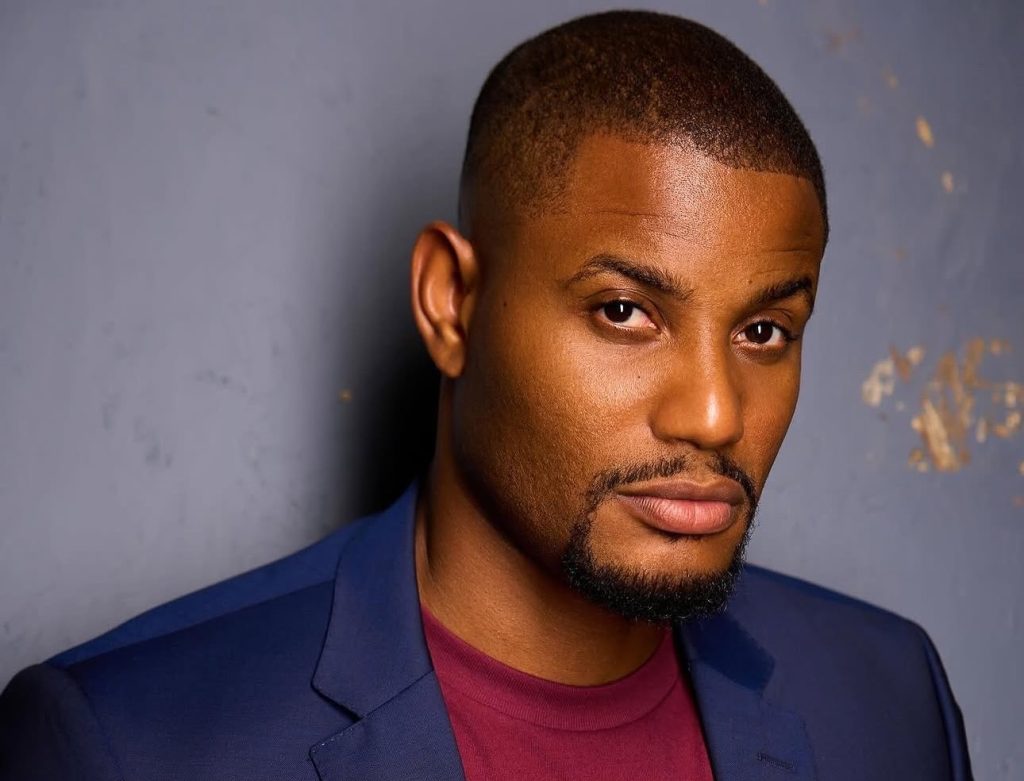
Nigerian movie actor Alexx Ekubo has passed away at the age of 40. The popular Nollywood actor had been away from the screen for some time and reportedly died after battling an undisclosed illness. Colleagues and close associates confirmed his death on Tuesday, expressing deep grief over the loss of a figure widely regarded as one of Nollywood’s most charismatic and stylish actors.
In a tribute, fellow actor Godwin Nnadiekwe described Ekubo as “a rare soul” and said the news had left him devastated, as he struggled to come to terms with the loss.
Ekubo was renowned for his roles in romantic comedies and drama films, building a strong reputation in Nollywood through performances in productions such as “Weekend Getaway” and “The Bling Lagosians”. He was also recognized for his fashion sense and influence among younger audiences.
Throughout his career, he appeared in numerous films and television shows, earning acclaim for his versatility and commanding screen presence. His death has prompted an outpouring of tributes from industry colleagues, with notable figures including Funke Akindele, Blessing CEO, Kate Henshaw, and Mercy Johnson sharing their condolences on social media.
The 27th edition of the Telecel Ghana Music Awards (TGMAs) took place at the Grand Arena of the Accra International Conference Centre (AICC) on Saturday, May 9. The event was attended by prominent figures in the music industry and featured performances from artists including Enam, Morgan Nero (who also performed after winning Unsung Artiste of the Year), Kofi Kinaata, Piesie Esther, Diana Hamilton, Wendy Shay, Samini, Medikal, Black Sherif, Lasmid, and a tribute to Daddy Lumba.
Black Sherif was announced as the Artiste of the Year. Here is the complete list of winners:
Hiplife Song of the Year: Medikal
Best Highlife Song of the Year: Kofi Kinaata
Best Male Vocalist of the Year: Asiamah
Best Female Vocalist of the Year: Enam
Best Hiphop Song of the Year: Black Sherif
Best Collaboration of the Year: Medikal ft Shatta Wale
International Collaboration of the Year: Molliy (Shake it to the Max remix)
Best Afro Pop Song of the Year: Black Sherif
Afrobeats Song of the Year: Kojo Black
Best Reggae/Dancehall Song of the Year: Molliy (Shake it to the Max)
Best Music Video/Director: David Duncan (AraTheJay) for “Put Am on God”
Urban/Contemporary Song of the Year: Kofi Owusu-Peprah
Gospel Artiste of the Year: Diana Hamilton
Best Producer of the Year: KTown (Shoulder)
Best Afrobeats/Afropop Artiste of the Year: Wendy Shay
Best Traditional Gospel Song of the Year: Piesie Esther
The United States has reversed its visa limitations on Ghana, allowing citizens to receive five-year multiple entry visas and expanded consular privileges. Ghana’s Foreign Affairs Minister, Samuel Okudzeto Ablakwa, announced the development after a bilateral meeting with US Under Secretary of State, Allison Hooker on the sidelines of the UN General Assembly.
“I am really pleased that months of high-level diplomatic negotiations has led to a successful outcome,” Minister Ablakwa said. He added that the Government of Ghana welcomes this decision as an affirmation of the strong and enduring partnership between Ghana and the United States.
The US had imposed visa restrictions on Ghana in July, limiting citizens to a maximum three-month single entry visa and other limitations. The restrictions were imposed due to concerns over visa overstays, particularly among students.
The lifting of these restrictions is expected to strengthen ties between the two countries and facilitate travel for Ghanaians visiting the US for business, education, or tourism.
The press once held the sword of truth. Today, many hold the President’s briefcase.
It was the age of Kweku Baako Jnr., Kofi Coomson, and Prof. P.V. Ansah — towering voices who turned journalism into a civic shield against military boots and party brutality. Their courage, in alliance with civil society, exposed the AFRC and PNDC’s human rights abuses. They stripped the P(NDC) of its propaganda cloak and ushered in the dawn of constitutional democracy. The media was fearless. It stood tall — the true Fourth Estate of the Republic.
But history took a sharp turn.
After the NDC’s 2000 electoral defeat, they did not sulk — they strategized. They saw clearly what the NPP failed to grasp: in a democracy, the airwaves are the new arsenal.
While the NPP basked in its early 2000s victories, drunk on constitutional legitimacy, the NDC went to work. Quietly, they began recruiting media minds, sponsoring media startups, buying airtime, building alliances. They knew what they were doing. By 2012, media houses weren’t just covering politics — many had merged ideologically with it.
Today, the numbers are staggering. Out of 549 active licensed FM stations in Ghana, over 410 are NDC-owned or NDC-aligned. Out of 135 active TV stations, more than 120 lean toward the NDC orbit. And the biggest players — Multimedia Group (Joy FM, Joy News, Adom FM) and Media General (TV3, Onua TV, etc.) — alone command over 50% of national listenership and viewership. Both have gone politically green.
In contrast, the NPP — rigid, risk-averse, and almost aristocratically indifferent — failed to adapt. They assumed that good governance alone would win the media’s affection. Worse, under Akufo-Addo, they reportedly refused to “play financial football” with key media houses, choosing austerity over patronage. That choice, while morally commendable, came at a political cost: the media turned from disinterested observers into hostile prosecutors.
From 2021 to 2024, mainstream media outlets opened unrelenting fire on the Akufo-Addo regime — often unfairly, sometimes maliciously, but always lethally. The NPP walked into an ambush they didn’t even know had been set. When the dust cleared in 2024, the party had suffered one of its most humiliating defeats in history. Some party voices now conveniently blame Dr. Bawumia — but the true betrayal came from a media landscape the party ignored, misread, and lost.
The silence of that media today, under John Mahama’s renewed presidency, is deafening. Take the CJ Torkornoo assault, for instance — a clear constitutional crisis. Yet no media of national repute has mounted editorial resistance. There are no front-page screams. No investigative documentaries. No balanced debate. What we hear instead is prosecution-by-broadcast, mostly aimed at the Judiciary, while shielding the Executive.
This is no longer a media ecosystem. It’s a captured communications infrastructure — weaponized, sanitized, and embedded in power.
When journalists become presidential appointees, when editorial lines sound like Cabinet scripts, the Republic is no longer guarded. It is choreographed. The NPP’s sin wasn’t only arrogance. It was lethargy in a high-speed political war. They underestimated the enemy. They overestimated their moral credit. And they forgot the simplest law in politics: you don’t win hearts — or elections — with silence.
The press once held the sword of truth. Today, many hold the President’s briefcase.
Ghana’s media, if you ask, may never rise as the Fourth Estate of Realm!
J.A. Sarbah Political Observer | Voice of National Conscience
Jota helped Liverpool win the Premier League title last season and also played for Portugal as they beat Spain in the final of the Nations League in June.
“The Portuguese Football Federation (FPT) and all of Portuguese football are completely devastated,” said Pedro Proenca, head of the FPT.
“Much more than an amazing player, with almost 50 international appearances for the national team, Diogo Jota was an extraordinary person, respected by all team-mates and opponents, someone with an infectious joy and a reference in the community itself.”
It was a funeral two years in the making. The deceased had laid in a morgue in Greater Accra, Ghana, biding his time in icy torpor as plans were made for his final journey. There was financing to be sourced, a coffin to be built, a procession to be organized, rituals to follow, much of it shrouded in secrecy. Everything had to be perfect. After all, the man, Nii Agbetekor, had been the supreme traditional military leader of the town of Nungua.
An event of this scale had not been mounted for more than 20 years, according to Swissacademic Regula Tschumi, who was there to document it all.When the day arrived, in November 2024, not everything went to plan, she recalled. Nii Agbetekor’s lion-shaped coffin caught fire, burning most of its pink mane. A ribbon was found to cover the worst of the damage and the procession continued. Otherwise, the funeral went well. The five military chiefs of the Amanfa clan, all very much living, followed the deceased in elaborate seats known aspalanquins — a turtle, a chili pepper, a rooster and a mudfish, and in a palm, the dead chief’s successor — while men in traditional uniform and other villagers thronged the streets.
Tschumi, an anthropologist, had heard of the event months in advance. What she didn’t know until she arrived was that her own research had helped planthe day. Not all rites are easily remembered, and the organizers had pored over a book she had written that covered the last time a supreme leader had passed. Using that information, and photos she had sourced, they were able to renew their traditions.
The funeral of Nii Agbetekor, the supreme traditional military leader of Nungua, in Greater Accra, took place in November 2024 and was a rare occasion given it grandeur. Regula Tschumi
It’s not the first time Tschumi has found herself in this position. Her 20-plus years of documenting the unique funeral traditions of the Ga people of southeast Ghana has resulted in a PhD on the subject, multiple academic volumes, and now an eye-opening photography book, “Buried in Style: Artistic Coffins and Funerary Culture in Ghana.”
Tschumi’s book contains photographs from 2004 to 2024, taken mostly of the Ga people of Greater Accra, but also the Fante, Ewe and Asante peoples of the neighboring Central, Eastern and Volta Regions. She collates them into sections covering Christian and traditional funerals, the rise of coffin dancers in Ghana, the tradition of “laying out,” and an index of bespoke figurative coffins made by local artisans.
A whale shark coffin was made for a deceased chief in Greater Accra, 2024. The creature is an auspicious symbol, as it is considered to be the largest and strongest shark, according to the photographer. Regula Tschumi
These coffins emerged in the mid-20th century, and were originally derived from the decorative traditional palanquins, said Tschumi.
In recent years they have captured the internet’s imagination thanks to their outlandish designs and literal intent. For example, a footballer who dreamed of moving to the United States was buried in football boot-shaped coffin, painted in the stars and stripes of the US flag, in 2022. Or a midwife buried inside a casket in the form of a laboring woman, in 2011. Or a traditional priest buried inside a giant blue teapot in 2009 — a reference to the one he would use in rituals.
Interestingly, it’s not the deceased but their family who decides on the design, Tschumi told CNN in a video call. “The family come to the (coffin maker)” she said. “Sometimes the artist has an idea, sometimes the family, sometimes they bring a photograph.”
Coffins typically take five to 10 days to create, and until recently carpenters worked entirely by hand, she explained. “They are not very expensive” by Western standards, Tschumi said. “That’s why (coffin makers) like to do business abroad,” she added; “to have a coffin bought by a museum (or) gallery is bigger business.”
Documenting the caskets is hard work. She’ll often have to stake out workshops for hours, as once coffins are finished, they’re quickly whisked away by relatives. That said, it’s nowhere near as hard as gaining access to some of the funerals.
“The Ga, they are not very open to foreigners,” said Tschumi, who has spent years earning the trust of village dignitaries, priests and persons of repute within the funeral trade.
There are good reasons for the Ga to be guarded. As the book notes, many traditional funeral practices were suppressed during the British colonial era, driving some already secretive rites further underground.
One was the practice of burying the dead under the floors of houses, Tschumi said, so that the spirit of the deceased could easily find its way back to the family home. When the colonial government forced the Ga to use cemeteries instead, it jeopardized this spiritual journey. However, the anthropologist has been told that the practice still continues in some areas.
Other elements of traditional funerals have also eluded her camera so far. “For chiefs and priests, we still don’t know where they are buried,” Tschumi said, explaining that chiefs are often buried at night away from prying eyes, with funerals conducted later, and performed with an empty coffin or palanquin.
But for the most part, the academic has achieved an incredible degree of access. A key figure in her story is Benjamin Aidoo, the originator of the now-famous “coffin dancers,” who has helped open doors for her since they first met in the early 2010s.
Benjamin Aidoo (center, in black hat) poses alongside some of his dancers in their “Scottish Red” uniform in 2022. Tschumi calls Aidoo one of her best friends, and a key figure in opening doors for her to document Ghana’s unique funeral traditions. Regula Tschumi
Aidoo entered the funeral business as an apprentice, working Fridays and Saturdays while still in high school to support his family, he told CNN on the phone.
“Marching solemly, you’d see people crying, people mourning, and it got to me,” he said. “I asked myself: Why do we mourn? We need to celebrate the dead.”
His realization would find an outlet years later as an undertaker running his own company, Nana Otafrija Pallbearing and Waiting Services.
One day, around 2012, he was waiting while carrying a coffin. Traditional drums played in the background. “I decided to start moving left, right, left, right. People stopped crying, then started to cheer us, started to throw money at it,” he recalled. “I said, ‘Wow, if I can do this and people stop crying, why don’t I get professional?’”
He began drilling his pallbearers in choreography, purchasing matching costumes and traveling the country for funerals.Business exploded pre-Covid, Aidoo said, when videos of his dancers went viral online and he employed approximately 100 people (the number is smaller now, he notes).
Today, routines and outfits are often bespoke, and Aidoo’s coffin dancers highly sought after. The company has also spurred on imitators, not all of whom are as skilled or well trained, notes Tschumi. Recently, pallbearers for one such company dropped a coffin during a routine and the academic said Aidoo feared it could hurt his business.
“As a professional, if a coffin goes down it’s the end of your career,” he said. “It was not my people, but it was very bad.”
Tschumi calls Aidoo “one of my best friends,” and that friendship has allowed her to witness parts of the funeral trade conducted strictly behind closed doors.
The tradition of displaying the deceased ahead of a funeral is hardly unique, but certain Ghanaian communities elevate the practice. In some of Tschumi’s most revealing photographs she documents the ornate and extravagant vigils known as “laying out.”
“Laying out” usually occurs the night before the funeral, and involves family and friends congregating in large, draped tents to pay their respects to and interact with the deceased. “Everything needs to look like reality,” said Aidoo. “You need to open their eyes to make sure everything is clear for people to see … You need to stuff their cheeks with cotton with surgical tools.”
The body is often posed in a seated position or standing to meet guests, and is dressed and accessorized in ways pointing to the life they lived. Throughout the night the deceased is sometimes “re-posed” by undertakers out of sight from mourners.
“Most undertakers won’t do that — they don’t know how,” said Tschumi, though Aidoo is one who can. “They are stiff, so it needs strength. They work sometimes in three or four people on the body.”
The night before a funeral, some families will undertake “laying out,” in which the deceased is displayed, with mourners coming to paying their respects. The deceased may be lying down, like this 2024 ceremony in Greater Accra, although they may be sat upright. Regula Tschumi
The most elaborate laying out Tschumi has witnessed was a priestess in the Central Region in 2017. The priestessstarted seated in her palanquin, which hung from the ceiling, before being repositioned “three or four” times and her outfit changed. In her last change, she was covered in white paste to protect her from evil and arranged like the day she was installed as a priestess, in a room that was a recreation of her shrine.
Laying out is not just for dignitaries, and not just solemn occasions. Tschumi’s book documents ceremonies for a fishmonger and a roadworker. The academic recounted a vigil in 2022 where the deceased, beer in hand, manned his own lit barbecue. “We put sausages on it. It was like a party, and he was there among the people,” she recalled.
On her trips, she has been intrigued to see new traditions emerge in other parts of the country. Tschumi recalled learning that her 2011 book “Concealed Art History, Transformation and Use of the Figurative Palanquins and Coffins of the Ga in Ghana”was shown by coffin makers to chiefs in the Central Region, west of where the Ga live in Greater Accra. The chiefs, who had not previously used palanquins, then began requesting their own, she said. “It’s interesting to see how the work of a researcher can influence the tradition in a place.”
What if the skyline of a city could change overnight? In China, that question has become a stunning reality. In just 28 hours and 45 minutes, the BROAD Group erected a 10-story residential tower using modular steel construction, forever altering the global conversation around how we build cities. While it may sound like science fiction, it’s real — and it’s only the beginning.
Who Is the BROAD Group?
Founded in 1988 and headquartered in Changsha, BROAD Group is best known for its energy-efficient air conditioning systems. But since 2009, the company has also been a quiet revolutionary in the construction sector, investing in modular, pre-fabricated, factory-built steel structures.
Their newest achievement: a fully functional high-rise completed faster than most single-family homes are framed.
The Science Behind Speed
The secret lies in modular construction — a process where steel modules (or “Living Building Units”) are built off-site in a factory-controlled environment. These modules are then transported to the site and stacked with the precision of Lego bricks.
Each unit includes:
Pre-installed wiring and plumbing
Built-in insulation and ventilation systems
Fireproof and earthquake-resistant walls
Instead of building brick by brick, floor by floor, BROAD constructs entire rooms and simply assembles them on location.
The Timeline: 28 Hours, 45 Minutes
The entire structure — dubbed the Living Building — was assembled in just over a day. Here’s how:
Pre-construction preparation: 3 months of module manufacturing
Transportation to site: 12 hours prior to build
On-site assembly: 28 hours, 45 minutes
Operational testing and interior finishing: under 72 hours
It’s not just the fastest build — it’s one of the most efficient.
Why It Works: The Engineering Masterstroke
BROAD uses high-strength stainless steel frames and a proprietary joining system that requires no welding. Instead, modules are bolted together and locked into place by mechanical seals.
This means the structure is strong enough to resist Level 9 earthquakes and hurricane-force winds.
Other engineering breakthroughs include:
Air filtration systems to block PM2.5 pollutants
Energy recovery ventilation (ERV)
Smart thermostats in every unit
Passive solar design
Cost and Efficiency
While exact numbers vary based on configuration, BROAD claims:
Cost per square meter is 30–50% less than conventional builds
Construction time reduced by over 90%
Labor requirements reduced by up to 80%
And with modular assembly, waste is reduced by over 90%, making this system one of the greenest construction approaches to date.
A Safer, Cleaner Construction Site
Traditional construction is chaotic, noisy, and often dangerous. Modular builds are different:
No dust clouds or debris
No loud jackhammers or heavy machinery
Significantly reduced worker injury risk
The result is a construction site that feels more like a quiet logistical operation than a loud, messy build zone.
Sustainability at Scale
The Living Building is not just fast — it’s green.
Each module is:
100% recyclable
Designed to minimize thermal bridging
Optimized for natural lighting and airflow
Plus, BROAD uses renewable energy in their factories, making the carbon footprint of each building dramatically lower than concrete-based equivalents.
Digital Twin Technology and AI Planning One reason the 10-story build was so flawlessly executed is BROAD’s use of digital twin simulation and AI-assisted scheduling. Before a single module was moved, the entire build was simulated in 3D using:
Structural analysis software
Assembly path optimization
Real-time equipment coordination
The result: zero downtime, no overlap, and a perfectly choreographed construction ballet.
Global Implications for Disaster Relief and Emergencies
Beyond housing, BROAD’s rapid-build systems could support emergency scenarios, including:
Post-earthquake temporary housing
Field hospitals in remote or war-affected areas
Shelters for climate refugees
Speed + modularity = life-saving infrastructure, not just urban expansion.
Not Just a Building — A System
This isn’t a one-off feat. BROAD’s modular system is scalable, replicable, and already being licensed internationally. Cities in India, the UAE, and parts of Europe are considering this approach for rapid housing development.
Entire communities could be built in days instead of months.
Challenges and Skepticism
Of course, not everyone is convinced:
Some architects criticize the aesthetics as boxy or too uniform
Local regulations often slow or prohibit modular expansion
Labor unions worry about job displacement
But with housing shortages, urban migration, and rising material costs, modular solutions like this are becoming harder to ignore.
The Future: High-Rises in Days, Not Decades
BROAD has already built a 57-story tower in 19 days using the same principles — proving that this isn’t limited to small buildings.
Conclusion
28 hours and 45 minutes is more than just a record — it’s a revolution. BROAD Group’s 10-story marvel shows us that cities don’t have to grow slowly. With the right technology, the future can rise overnight.
And if the rest of the world follows China’s lead, the skylines of tomorrow might be shaped not by cranes, but by logistics trucks delivering ready-to-stack dreams.
The trial of American music mogul Sean “Diddy” Combs, who is accused of running a sprawling sex trafficking operation, is almost over.
The 55-year-old was arrested last September and faces charges including racketeering, sex trafficking and transportation to engage in prostitution. He could be sentenced to life in prison if convicted.
Mr Combs has pleaded not guilty and denied all allegations against him.
Dozens of prospective jurors were screened before being whittled down to 12 and six alternates.
During the trial, the jury has heard from 34 witnesses, including ex-girlfriends, former employees of Mr Combs, male escorts and federal agents.
The prosecution presented their closing statement on Thursday, and told the jury that Mr Combs is the “leader of a criminal enterprise” who used violence and fear in “brutal crimes”.
Mr Comb’s defence team is expected to present their closing statements on Friday.
After that, it will go to the 12-member jury to decide the fate of the hip-hop mogul.
Mr Combs also faces dozens of civil lawsuits from individuals who accuse him of using his power to drug, assault, rape, intimidate and silence people. He has said the individual lawsuits are attempts “for a quick payday”.
How can I follow the trial?
The court is expected to be open to the public, but proceedings will not be televised or streamed online.
Cameras, phones and electronic devices are normally not allowed in US federal courtrooms.
The trial proceedings began in early May with jury selection at the Daniel Patrick Moynihan courthouse in Lower Manhattan.
US District Judge Arun Subramanian told jurors the trial could last around eight weeks.
How were jurors selected?
Dozens of potential jurors were vetted by the court.
The process included potential jurors looking through a long list of places and people that could be mentioned during the trial, with names like Kanye West and Kid Cudi.
The “People and Places” list was so long that Judge Subramanian said he “felt like I was reading an appendix for Lord of the Rings”.
Potential jurors also had to fill out questionnaires that asked whether they had “views about hip hop artists” or “feelings concerning violence, sexual assault”.
The judge reminded the court several times of the importance of choosing a fair and impartial jury.
What are the charges and allegations against Diddy?
In the federal criminal case being heard in New York, Mr Combs is charged with racketeering conspiracy, two charges of sex trafficking and two charges of transportation to engage in prostitution.
Many of the most severe allegations relate to the racketeering conspiracy charge.
This includes accusations of kidnapping, drugging, and coercing women into sexual activities, sometimes using firearms or threats of violence.
In a raid on his Los Angeles mansion, police found supplies that they said were intended for use in orgies known as “freak offs”, including drugs and more than 1,000 bottles of baby oil.
Tony Buzbee, a Texas lawyer handling some of these cases, said that more than 100 women and men from across the US had either filed lawsuits against the rap mogul or intended to do so.
In December 2023, a woman known in court papers as Jane Doe alleged that she was “gang raped” by Mr Combs and others in 2003, when she was 17. She said she was given “copious amounts of drugs and alcohol” before the attack.
Mr Combs’ legal team dismissed the flurry of lawsuits as “clear attempts to garner publicity.”
Sean Combs and Cassie Ventura were in an on-and-off relationship for more than a decade
Mr Combs’ current legal issues began in late 2023 when he was sued by Ms Ventura, also known as Cassie, for violent abuse and rape.
That lawsuit was settled for an undisclosed amount a day after it was filed, with Mr Combs maintaining his innocence.
Since then, dozens of other people have filed lawsuits accusing Mr Combs of sexual assault, with accusations dating back to 1991. He denies all the claims.
He apologised for his behaviour, saying: “I take full responsibility for my actions in that video. I was disgusted then when I did it. I’m disgusted now.”
What has Diddy said about the charges against him?
In a statement to the BBC about the federal criminal charges, Mr Combs’ lawyer said: “In court, the truth will prevail: that Mr Combs never sexually assaulted or trafficked anyone – man or woman, adult or minor.”
Diddy’s lawyers later filed a motion to dismiss one part of the federal indictment in which he is accused of transportation to engage in prostitution. His team argued he was being unfairly targeted due to his race.
They said he thought it was “appropriate” to have multiple sex partners, including sex workers.
At the same hearing, prosecutors revealed that Mr Combs had rejected a plea deal.
Mr Combs’ lawyers have consistently denied the allegations made against him in the civil lawsuits, describing them as “sickening” and suggesting they were made by “individuals looking for a quick payday”.
How long could Diddy spend in jail if he is found guilty?
Mr Combs has been held at this Brooklyn jail
If convicted on the racketeering charge, Mr Combs faces up to life in prison.
He faces another statutory minimumo sentence of 15 years if he is found guilty of sex trafficking.
Transportation for purposes of prostitution carries a maximum sentence of 10 years.
Mr Combs has been held at the Metropolitan Detention Centre in Brooklyn, New York, since his arrest on 16 September 2024.
Critics describe the prison as overcrowded and understaffed, with a culture of violence.
His lawyers argued for his release, citing the jail’s “horrific” conditions, but a New York federal judge denied the bail request, describing Mr Combs as a “serious flight risk”.
They accused him of “relentless efforts” to “corruptly influence witness testimony”.
A judge permitted Mr Combs to wear non-prison clothing during his trial rather than the jumpsuits he wears in jail.
When he appeared in court for jury selection, the rapper wore a blue sweater and white shirt with glasses on his head.
How did ‘Sean ‘Diddy’ Combs become successful?
Mr Combs – who has also gone by the names Puffy, Puff Daddy, P Diddy, Love, and Brother Love – emerged in the hip-hop scene in the 1990s.
His early music career success included helping launch the careers of Mary J Blige and Christopher Wallace – aka Biggie Smalls, or The Notorious B.I.G.
His music label Bad Boy Records became one of the most important labels in rap and expanded to include Faith Evans, Ma$e, 112, Mariah Carey and Jennifer Lopez.
Mr Combs also had a prolific business career outside of music, including a deal with British drinks company Diageo to promote the French vodka brand Cîroc.
In 2023, he released his fifth record, The Love Album: Off The Grid and earned his first solo nomination at the Grammy Awards. He was also named a Global Icon at the MTV Awards.
DISCLAIMER: The Views, Comments, Opinions, Contributions and Statements made by Readers and Contributors on this platform do not necessarily represent the views or policy of frame Networks.
The Human Trafficking Secretariat of the Ministry of Gender, Children and Social Protection has launched a media campaign in Accra to raise awareness about human trafficking ahead of the World Day Against Trafficking in Persons on July 30, 2025. The theme for this year’s commemoration is “The Human Trafficking Law @ 20: The Journey So Far in Ghana,” marking 20 years since the passage of the Human Trafficking Act, 2005 (Act 694).
Minister for Gender, Children and Social Protection, Dr. Agnes Naa Momo Lartey, emphasized the need for focused laws and border control systems that protect victims rather than criminalize them. She called on the media and civil society to join efforts to eliminate human trafficking in Ghana, highlighting the country’s role as a source, transit, and destination for trafficked persons.
The Chairperson of the Parliamentary Select Committee on Gender, Helen Adjoa Ntoso, acknowledged progress made in addressing trafficking but stressed the need for sustained efforts, including policy development, inter-agency coordination, victim support, and awareness creation. She expressed concern about the misidentification of trafficking cases, particularly involving children.
The Director of the Human Trafficking Secretariat, Abena Anobea Asare, emphasized the importance of public awareness and knowledge-sharing in combating human trafficking. She called for a collective effort across legal, humanitarian, and security sectors to build a just, safe, and inclusive society.