Site Logo
Site Logo
Site Logo
Site Logo

Category: Tech

  • Ghana’s Communication Minister to Establish Committee for Broadcasting Reforms

    Ghana’s Communication Minister to Establish Committee for Broadcasting Reforms

    The Minister of Communication, Digital Technology, and Innovations, Samuel Nartey George, has announced plans to set up a committee for broadcasting reforms in the country. The committee, expected to be established by next Friday, will be tasked with reviewing proposals aimed at enhancing the quality of media and broadcasting.

    According to Minister George, the committee will collaborate with major industry players, including the National Media Commission (NMC) and the National Communications Authority (NCA), to define a new policy direction for the broadcasting sector. The goal of this initiative is to improve the professionalism, credibility, and public respect for journalists and broadcasters.

    The committee’s primary task will be to recommend a regulatory framework for the upcoming Broadcasting Bill. Specifically, the committee will explore two options: either consolidating the mandates of the NMC and NCA under a single regulatory body or strengthening the existing dual structure through a “converged regulation” model.

    Minister George emphasized that it’s essential not to rush into amending the bill without a clear direction. The committee is expected to be fully constituted within the next few days and will be given a 30-day mandate to consult widely with stakeholders across the media landscape before submitting its final recommendations.

    The announcement was made during a meeting with a team from the Africa Media Bureau, led by Hillary Andoh. The Africa Media Bureau, organizers of the “Broadcast at the Crossroads Forum,” presented the Minister with a report containing key findings and contributions from the forum.

  • Communication Minister Meets Dubawa to Tackle Misinformation

    Communication Minister Meets Dubawa to Tackle Misinformation

    The Minister for Communication, Digital Technology, and Innovations, Samuel Nartey George, has met with a delegation from Dubawa West Africa to discuss collaborative efforts to combat misinformation and disinformation in Ghana.

    During the meeting, Minister George revealed that the Ministry has completed a draft legislation aimed at tackling misinformation, disinformation, hate speech, and other related challenges.

    The Minister also disclosed that he has directed the National Information Technology Agency (NITA) to develop digital signatures as part of a Public Key Infrastructure (PKI) system. This initiative will enable citizens and fact-checkers to verify the authenticity of official statements from ministries and government agencies.

    George emphasized the importance of transparency and constructive public discourse, stating, “Citizens must remain critical of the government, but they must criticize us with facts, not fabrications.”

    The delegation, led by Nathan Daguda, commended the Minister’s proactive stance on addressing misinformation. Dubawa, the fact-checking arm of the Centre for Journalism, Innovation, and Development (CJID), operates across several West African countries, promoting information integrity

  • China built a 10-story building in 29 hours — Here’s How!

    China built a 10-story building in 29 hours — Here’s How!

    What if the skyline of a city could change overnight? In China, that question has become a stunning reality. In just 28 hours and 45 minutes, the BROAD Group erected a 10-story residential tower using modular steel construction, forever altering the global conversation around how we build cities. While it may sound like science fiction, it’s real — and it’s only the beginning.

    Who Is the BROAD Group?

    Founded in 1988 and headquartered in Changsha, BROAD Group is best known for its energy-efficient air conditioning systems. But since 2009, the company has also been a quiet revolutionary in the construction sector, investing in modular, pre-fabricated, factory-built steel structures.

    Their newest achievement: a fully functional high-rise completed faster than most single-family homes are framed.

    The Science Behind Speed

    The secret lies in modular construction — a process where steel modules (or “Living Building Units”) are built off-site in a factory-controlled environment. These modules are then transported to the site and stacked with the precision of Lego bricks.

    Each unit includes:

    • Pre-installed wiring and plumbing
    • Built-in insulation and ventilation systems
    • Fireproof and earthquake-resistant walls

    Instead of building brick by brick, floor by floor, BROAD constructs entire rooms and simply assembles them on location.

    The Timeline: 28 Hours, 45 Minutes

    The entire structure — dubbed the Living Building — was assembled in just over a day. Here’s how:

    • Pre-construction preparation: 3 months of module manufacturing
    • Transportation to site: 12 hours prior to build
    • On-site assembly: 28 hours, 45 minutes
    • Operational testing and interior finishing: under 72 hours

    It’s not just the fastest build — it’s one of the most efficient.

    Why It Works: The Engineering Masterstroke

    BROAD uses high-strength stainless steel frames and a proprietary joining system that requires no welding. Instead, modules are bolted together and locked into place by mechanical seals.

    This means the structure is strong enough to resist Level 9 earthquakes and hurricane-force winds.

    Other engineering breakthroughs include:

    • Air filtration systems to block PM2.5 pollutants
    • Energy recovery ventilation (ERV)
    • Smart thermostats in every unit
    • Passive solar design

    Cost and Efficiency

    While exact numbers vary based on configuration, BROAD claims:

    • Cost per square meter is 30–50% less than conventional builds
    • Construction time reduced by over 90%
    • Labor requirements reduced by up to 80%

    And with modular assembly, waste is reduced by over 90%, making this system one of the greenest construction approaches to date.

    A Safer, Cleaner Construction Site

    Traditional construction is chaotic, noisy, and often dangerous. Modular builds are different:

    • No dust clouds or debris
    • No loud jackhammers or heavy machinery
    • Significantly reduced worker injury risk

    The result is a construction site that feels more like a quiet logistical operation than a loud, messy build zone.

    Sustainability at Scale

    The Living Building is not just fast — it’s green.

    Each module is:

    • 100% recyclable
    • Designed to minimize thermal bridging
    • Optimized for natural lighting and airflow

    Plus, BROAD uses renewable energy in their factories, making the carbon footprint of each building dramatically lower than concrete-based equivalents.

    Digital Twin Technology and AI Planning
    One reason the 10-story build was so flawlessly executed is BROAD’s use of digital twin simulation and AI-assisted scheduling. Before a single module was moved, the entire build was simulated in 3D using:

    • Structural analysis software
    • Assembly path optimization
    • Real-time equipment coordination

    The result: zero downtime, no overlap, and a perfectly choreographed construction ballet.

    Global Implications for Disaster Relief and Emergencies

    Beyond housing, BROAD’s rapid-build systems could support emergency scenarios, including:

    • Post-earthquake temporary housing
    • Field hospitals in remote or war-affected areas
    • Shelters for climate refugees

    Speed + modularity = life-saving infrastructure, not just urban expansion.

    Not Just a Building — A System

    This isn’t a one-off feat. BROAD’s modular system is scalable, replicable, and already being licensed internationally. Cities in India, the UAE, and parts of Europe are considering this approach for rapid housing development.

    Entire communities could be built in days instead of months.

    Challenges and Skepticism

    Of course, not everyone is convinced:

    • Some architects criticize the aesthetics as boxy or too uniform
    • Local regulations often slow or prohibit modular expansion
    • Labor unions worry about job displacement

    But with housing shortages, urban migration, and rising material costs, modular solutions like this are becoming harder to ignore.

    The Future: High-Rises in Days, Not Decades

    BROAD has already built a 57-story tower in 19 days using the same principles — proving that this isn’t limited to small buildings.

    Conclusion

    28 hours and 45 minutes is more than just a record — it’s a revolution. BROAD Group’s 10-story marvel shows us that cities don’t have to grow slowly. With the right technology, the future can rise overnight.

    And if the rest of the world follows China’s lead, the skylines of tomorrow might be shaped not by cranes, but by logistics trucks delivering ready-to-stack dreams.

  • Interior Minister Urges Stronger Legal Frameworks for Digital IDs in West Africa

    Interior Minister Urges Stronger Legal Frameworks for Digital IDs in West Africa

    Source: Judith Twumwaa, ISD

    The Minister of the Interior, Mr. Muntaka Mohammed-Mubarak, has called for stronger legal and regulatory frameworks to support the success of digital ID systems, emphasising the importance of protecting data privacy and ensuring security. 

    He noted that involving citizens, the private sector, and civil society was crucial in the design and implementation processes.

    Speaking at the opening of the ECOWAS Validation Workshop on Stakeholders’ Engagement and Foundational ID Systems Interoperability Strategies on Tuesday in Accra, he emphasised the significant role of digital identification in promoting economic empowerment, regional integration, and inclusive development across West Africa. 

    He highlighted Ghana’s progress in this area and revealed that more than 17 million Ghanaians have enrolled in the National Identification System.

    “The Ghana Card, which is the country’s flagship identification credential, has been integrated with major national systems, including the Social Security and National Insurance Trust, the Ghana Revenue Authority, and the National Health Insurance Scheme,” he stated. 

    The Minister said that interoperable identification systems are no longer optional but essential for economic advancement, particularly within frameworks such as the African Continental Free Trade Area (AfCFTA) and the ECOWAS Protocol on Free Movement of Persons.

    The Director of Free Movement of Persons and Migration at the ECOWAS Commission, Mr. Albert Siaw-Boateng, described the workshop as a platform for stakeholders to review and validate key strategies for achieving ID system interoperability across ECOWAS member states. 

    He expressed appreciation to the former President of ECOWAS, President John Dramani Mahama, for his longstanding dedication to the agenda, reflecting Ghana’s leadership in advancing regional unity and development.

    The West Africa Unique Identification for Regional Integration and Inclusion (WURI) programme aims to provide unique identification to individuals across the ECOWAS region, paving the way for a more integrated and inclusive future.

  • Ghana Launches Participation in Osaka Expo 2025

    Ghana Launches Participation in Osaka Expo 2025

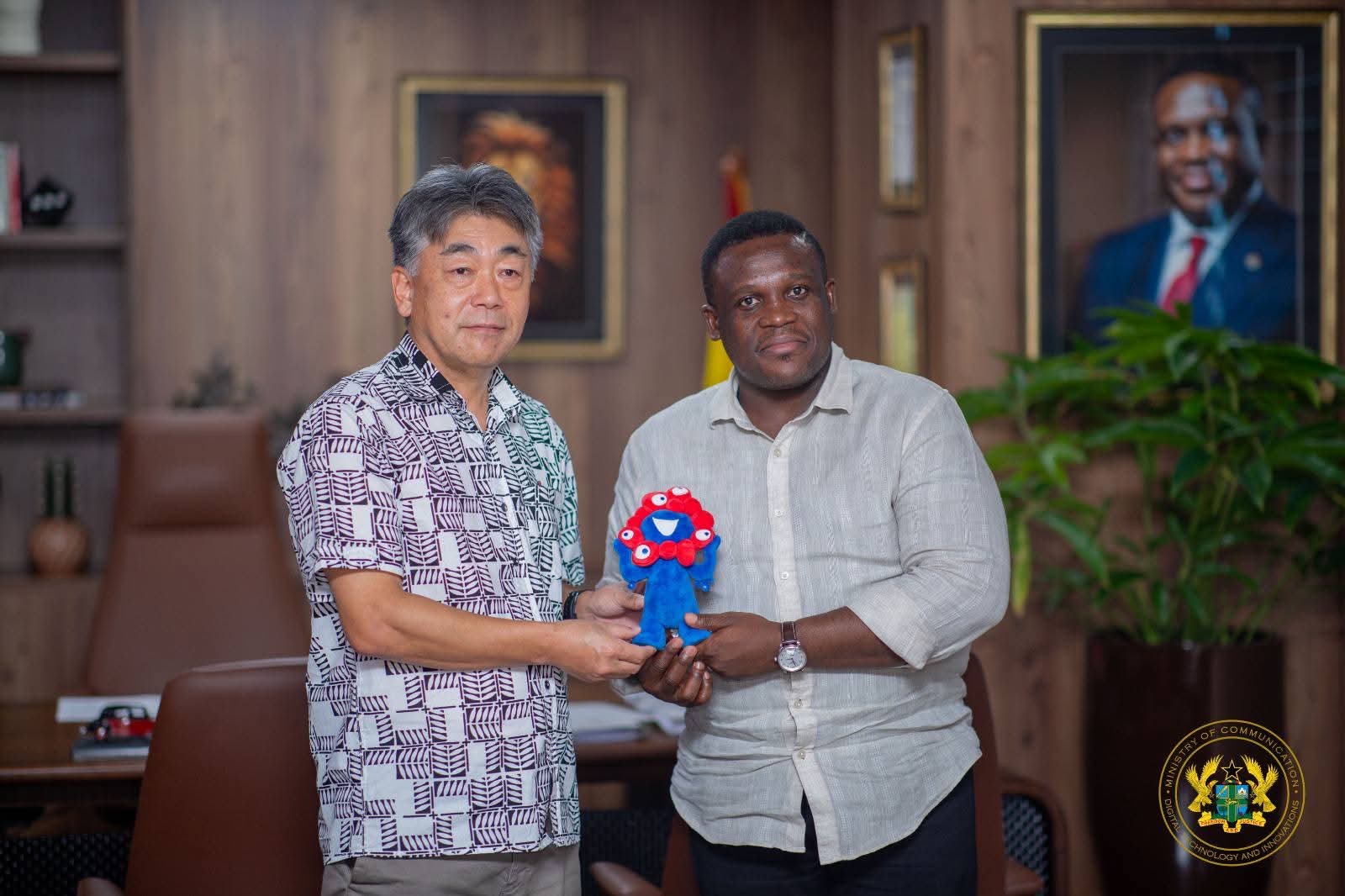
    The Minister of Communication, Digital Technology and Innovation, has officially launched Ghana’s participation in the Osaka Expo 2025, set to take place from April 13 to October 13, 2025, in Kansai, Japan.

    The Minister of Communication, Digital Technology and Innovation, Samuel Nartey George, has officially launched Ghana’s participation in the Osaka Expo 2025, set to take place from April 13 to October 13, 2025, in Kansai, Japan. The event, themed “Designing the Future Societies of Our Lives,” aims to foster collaboration between Ghana and Japan.

    Mr. George highlighted the potential for Ghana’s ICT sector to shine on a global platform, showcasing innovative products and services from fintech and e-governance to digital health and smart solutions. These advancements are driving Ghana’s digital transformation. The Minister emphasized the importance of collaborating with local ICT firms to attract investment and create job opportunities.

    A robust participation strategy is planned, including an exhibition of cutting-edge projects and services, an ICT Business Forum for industry leaders, and B2B sessions to connect Ghanaian institutions with their Japanese counterparts. The initiative will culminate in the Ghana Day celebration on September 11, 2025, showcasing the nation’s digital progress. Mr. George will lead a delegation from Ghana, including Ministry and private sector partners.

    Beyond the Expo, plans are underway to deepen ties with Japan, including a Memorandum of Understanding (MoU) focused on digital infrastructure, cybersecurity, and technology transfer. Deputy Chargé d’Affaires Mr. Naoki Mitori, speaking on behalf of the Japanese Ambassador, emphasized the historical ties between Japan and Ghana and highlighted the importance of strengthening these bonds further.

    Mr. Mitori noted growing interest in Ghana within Japan, attributed to historical figures and the popularity of Ghanaian cocoa and chocolate. He mentioned two major upcoming events: the Tokyo International Conference on African Development (TICAD) in August, where Ghana is expected to send a high-level delegation, and the ongoing Osaka-Kansai World Expo. As of the end of May, a total of 5 million people had already visited the World Expo in Kansai. The Expo’s mascot, “Myaku Myaku,” symbolizing the event’s theme and the continuity of knowledge and culture, was also introduced.

  • Ghana’s Telecom Sector Set for Transformation: Minister Outlines Plans

    Ghana’s Telecom Sector Set for Transformation: Minister Outlines Plans

    Ghana’s telecom sector to see transformation through engagement-led leadership, with focus on improving network quality, reducing data prices, and increasing investment.

    The Minister for Communications, Digital Technology, and Innovations, Samuel Nartey George, has pledged to adopt an engagement-led leadership style to revitalize Ghana’s telecommunications sector. Speaking at a press briefing in Accra, Mr. George emphasized the importance of involving all stakeholders in decision-making processes to benefit the entire ecosystem.

    The Minister stressed the need for healthy and sustainable competition in the sector, which he believes will lead to better services and price reductions in the long term. To improve network quality, Mr. George has mandated all Mobile Network Operators to make critical investments in their networks over the next quarter. The regulator will conduct a rigorous quality-of-service assessment in the final quarter of the year, with defaulting operators facing sanctions.

    Effective July 1, 2025, all data bundles will experience a 10% increase. Specific bundle upgrades include Airtel Tigo’s 400 GHC bundle increasing from 195 GB to 236 GB, Telecel’s 400 GHC bundle increasing from 190 GB to 250 GB, and MTN implementing a 15% increase across all its data bundles and restoring the 399 GHC bundle from 92.88 GB to 214 GB.

    The Minister acknowledged the financial strain this may impose on network operators but expressed optimism about the positive outcomes for consumers. Mr. George is also working to rationalize tax components that contribute to the high cost of data, aiming to reduce the 39% tax burden on data prices.

    The Minister expressed gratitude to the CEOs of the three major telecom companies for their commitment to invest approximately $1.2 million in network enhancements by the end of the year. The National Communications Authority (NCA) has established a reliable billing verification system to prevent arbitrary price changes.

    Mr. George reaffirmed his commitment to serving the people of Ghana, stating, “I will serve you with heart, with sweat, and with blood.” With these initiatives, the Minister aims to transform the telecom sector, improve services, and make data more affordable for Ghanaians.

  • Ghana’s President Mahama Implements Cost-Saving Measure: DSTV and Satellite TV Ban at Jubilee House

    Ghana’s President Mahama Implements Cost-Saving Measure: DSTV and Satellite TV Ban at Jubilee House

    President John Mahama has directed a ban on DSTV and other satellite TV subscriptions at the Jubilee House, citing cost-saving measures. Only local TV stations will be accessible.

    In a significant move to reduce non-essential public spending and promote fiscal responsibility, President John Mahama has directed a ban on DSTV and other satellite TV subscriptions at the Jubilee House. The Minister of State for Government Communications, Felix Ofosu Kwakye, confirmed that no office at the presidency is currently allowed to subscribe to pay-TV services.

    Details of the Ban

    The ban, already in effect at the presidency, is expected to be extended to all government agencies. In an interview with Evans Mensah on JoyNews, Felix Owusu Kwakye stated the move will help save significant costs and promote modesty in governance. Government offices will be limited to local TV stations only. “If you come to this house, there’s no office in this house that is allowed to subscribe to DSTV or any satellite television,” Mr. Kwakye said.

    Rationale Behind the Decision

    The government believes that this move will help eliminate unnecessary expenses and promote fiscal discipline. By cutting back on non-essential spending, the administration aims to make governance more efficient and transparent. “When you computed the cost, it was significant money,” Mr. Kwakye added.

    Future Plans

    More cost-cutting measures are expected soon as part of the administration’s efforts to make governance more efficient and transparent. Mr. Kwakye emphasized President Mahama’s commitment to making savings for the Ghanaian people and demonstrating modesty in governance. “This is a man deeply committed to making savings for the Ghanaian people. Governance necessarily involves taking tough decisions… but the citizenry must see corresponding levels of modesty on the part of government officials—and that’s what President Mahama is committed to doing,” he said.

    Commitment to Fiscal Responsibility

    The President’s directive underscores his administration’s commitment to prudent financial management and transparency. By eliminating unnecessary expenses, the government aims to ensure that taxpayer money is used effectively and efficiently. This move is part of a broader strategy to promote fiscal discipline and responsible spending across government institutions.

    Impact on Government Agencies

    The ban on DSTV and satellite TV subscriptions is expected to have a significant impact on government agencies. By limiting access to local TV stations only, government offices will no longer be able to subscribe to pay-TV services. This move will help reduce costs and promote fiscal responsibility across government institutions.