The United States has reversed its visa limitations on Ghana, allowing citizens to receive five-year multiple entry visas and expanded consular privileges. Ghana’s Foreign Affairs Minister, Samuel Okudzeto Ablakwa, announced the development after a bilateral meeting with US Under Secretary of State, Allison Hooker on the sidelines of the UN General Assembly.
“I am really pleased that months of high-level diplomatic negotiations has led to a successful outcome,” Minister Ablakwa said. He added that the Government of Ghana welcomes this decision as an affirmation of the strong and enduring partnership between Ghana and the United States.
The US had imposed visa restrictions on Ghana in July, limiting citizens to a maximum three-month single entry visa and other limitations. The restrictions were imposed due to concerns over visa overstays, particularly among students.
The lifting of these restrictions is expected to strengthen ties between the two countries and facilitate travel for Ghanaians visiting the US for business, education, or tourism.
The Akwatia constituency has lost its esteemed Member of Parliament, Ernest Kumi, who passed away following a short battle with illness. While the exact circumstances of his death remain undisclosed, it is understood that he was actively participating in parliamentary proceedings just a week prior to his demise, according to reports from Joy News’ parliamentary correspondent, Kweku Asante
The sudden passing of MP Kumi sends shockwaves through the New Patriotic Party (NPP) and the broader parliamentary community, where his insights and contributions will be sorely missed. As a relatively new MP, Kumi had found himself at the center of a highly publicized legal challenge questioning the validity of his parliamentary seat.
Interestingly, Kumi’s death occurs mere weeks after a significant legal development: the Supreme Court’s decision to overturn his conviction for contempt of court. This conviction stemmed from the disputed 2024 parliamentary election results. Earlier, in February 2025, the Koforidua High Court had ruled against Kumi, finding him guilty of ignoring a court order that prohibited him from taking the oath of office as an MP. The court had subsequently issued a warrant for his arrest due to his non-appearance in court and apparent disregard for its directives.
The press once held the sword of truth. Today, many hold the President’s briefcase.
It was the age of Kweku Baako Jnr., Kofi Coomson, and Prof. P.V. Ansah — towering voices who turned journalism into a civic shield against military boots and party brutality. Their courage, in alliance with civil society, exposed the AFRC and PNDC’s human rights abuses. They stripped the P(NDC) of its propaganda cloak and ushered in the dawn of constitutional democracy. The media was fearless. It stood tall — the true Fourth Estate of the Republic.
But history took a sharp turn.
After the NDC’s 2000 electoral defeat, they did not sulk — they strategized. They saw clearly what the NPP failed to grasp: in a democracy, the airwaves are the new arsenal.
While the NPP basked in its early 2000s victories, drunk on constitutional legitimacy, the NDC went to work. Quietly, they began recruiting media minds, sponsoring media startups, buying airtime, building alliances. They knew what they were doing. By 2012, media houses weren’t just covering politics — many had merged ideologically with it.
Today, the numbers are staggering. Out of 549 active licensed FM stations in Ghana, over 410 are NDC-owned or NDC-aligned. Out of 135 active TV stations, more than 120 lean toward the NDC orbit. And the biggest players — Multimedia Group (Joy FM, Joy News, Adom FM) and Media General (TV3, Onua TV, etc.) — alone command over 50% of national listenership and viewership. Both have gone politically green.
In contrast, the NPP — rigid, risk-averse, and almost aristocratically indifferent — failed to adapt. They assumed that good governance alone would win the media’s affection. Worse, under Akufo-Addo, they reportedly refused to “play financial football” with key media houses, choosing austerity over patronage. That choice, while morally commendable, came at a political cost: the media turned from disinterested observers into hostile prosecutors.
From 2021 to 2024, mainstream media outlets opened unrelenting fire on the Akufo-Addo regime — often unfairly, sometimes maliciously, but always lethally. The NPP walked into an ambush they didn’t even know had been set. When the dust cleared in 2024, the party had suffered one of its most humiliating defeats in history. Some party voices now conveniently blame Dr. Bawumia — but the true betrayal came from a media landscape the party ignored, misread, and lost.
The silence of that media today, under John Mahama’s renewed presidency, is deafening. Take the CJ Torkornoo assault, for instance — a clear constitutional crisis. Yet no media of national repute has mounted editorial resistance. There are no front-page screams. No investigative documentaries. No balanced debate. What we hear instead is prosecution-by-broadcast, mostly aimed at the Judiciary, while shielding the Executive.
This is no longer a media ecosystem. It’s a captured communications infrastructure — weaponized, sanitized, and embedded in power.
When journalists become presidential appointees, when editorial lines sound like Cabinet scripts, the Republic is no longer guarded. It is choreographed. The NPP’s sin wasn’t only arrogance. It was lethargy in a high-speed political war. They underestimated the enemy. They overestimated their moral credit. And they forgot the simplest law in politics: you don’t win hearts — or elections — with silence.
The press once held the sword of truth. Today, many hold the President’s briefcase.
Ghana’s media, if you ask, may never rise as the Fourth Estate of Realm!
J.A. Sarbah Political Observer | Voice of National Conscience
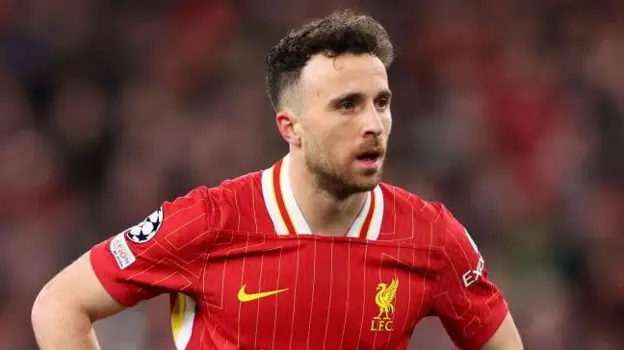
Jota helped Liverpool win the Premier League title last season and also played for Portugal as they beat Spain in the final of the Nations League in June.
“The Portuguese Football Federation (FPT) and all of Portuguese football are completely devastated,” said Pedro Proenca, head of the FPT.
“Much more than an amazing player, with almost 50 international appearances for the national team, Diogo Jota was an extraordinary person, respected by all team-mates and opponents, someone with an infectious joy and a reference in the community itself.”
Minister for Communication, Digital Technology, and Innovations, Samuel Nartey George
The Minister for Communication, Digital Technology, and Innovations, Samuel Nartey George, has called on graduates to become leaders in Ghana’s digital economy. Speaking at Perez University College’s 9th graduation ceremony, he encouraged the Class of 2025 to drive innovation, integrity, and leadership in shaping a technology-driven future.
George highlighted the rapidly changing nature of work and the need for adaptability, continuous learning, and leadership. He emphasized the government’s vision for a 24-hour digital economy, supported by smart infrastructure and data-driven public services. The minister outlined ongoing initiatives, including the Smart Data Exchange, One Million Coders, and the National Startup Ecosystem.
challenged graduates to take bold steps, build their own opportunities, and create jobs for others. He emphasized the importance of a value-driven approach to development, stressing the need for inclusion, integrity, and purpose. The minister concluded by urging graduates to make God the center of their journey and become leaders in their generation.
The Chancellor of Perez University College, Archbishop Charles Agyinasare, called for financial support for private universities, while the Director-General of GTEC, Prof. Ahmed Jinapor Abdullai, commended the university’s impact on widening access to tertiary education.
The government is set to reintroduce the Advertising Bill to Parliament, aiming to regulate the industry, promote ethical standards, and protect consumers. Deputy Trade Minister Sampson Ahi announced this at the 2025 Gong Gong Festival of Creativity & Awards in Accra.
The bill will provide a modern legal framework to standardize advertising practices and sanitize the industry. Ahi highlighted the advertising sector’s significant contribution to Ghana’s economy, including job creation, innovation, and revenue generation. Specifically, the industry contributes over GHS 2.5 billion annually to Ghana’s GDP and supports various sectors such as agriculture, health, fintech, fashion, and manufacturing.
Ahi emphasized the industry’s role in driving consumer demand, brand growth, and job opportunities for young Ghanaians. He noted that the sector offers opportunities for skills development and entrepreneurship, particularly at a time when youth unemployment remains a challenge.
The government reiterates its support for the creative economy, prioritizing advertising alongside manufacturing and commerce. Ahi urged the industry to innovate, particularly in the digital age, saying, “As AI and digital transformation reshape the world, Ghana’s advertising sector must keep evolving, telling stories that benefit both our people and our economy.”
The 2025 Gong Gong Festival celebrated creativity and innovation in the advertising industry, honoring leading brands and agencies for their influence and creativity. The festival’s theme, “Disrupt & Inspire: Recognising Brands and Agencies that Challenge Norms and Redefine Creativity,” highlighted the industry’s potential for innovation and growth.
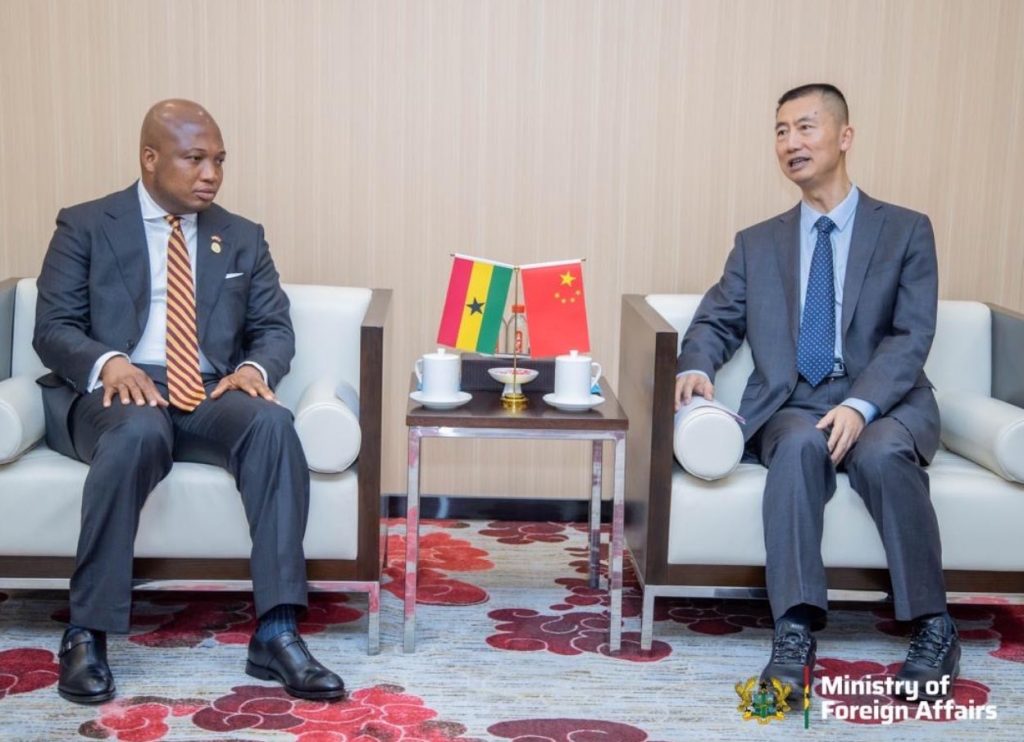
Ghana’s Minister for Foreign Affairs, Samuel Okudzeto Ablakwa (left) and Vice Mayor of Nanning, Guo Wei (right)
Ghana and China have reinforced their economic ties, with bilateral trade surging to $11 billion and the potential to reach $15 billion. The Minister for Foreign Affairs, Samuel Okudzeto Ablakwa, revealed this during high-level talks with a Chinese delegation from Nanning.
The two nations are exploring deeper economic cooperation, with China remaining Ghana’s top trading partner. Ablakwa suggested exchanging knowledge in areas like urban planning, fundraising, sanitation, and technology. He also encouraged the Vice Mayor of Nanning, Guo Wei, to select cities in his province to pair with Ghanaian cities, promoting people-to-people exchanges.
Ablakwa reiterated the government’s determination to eradicate illicit mining (galamsey) due to its environmental and social impacts. He urged the Vice Mayor to launch a public education campaign in Nanning to raise awareness about the consequences of galamsey, emphasizing that Ghana welcomes investment but will not tolerate unlawful activities.
Guo Wei expressed interest in collaborating with Ghana in economics, trade, agriculture, mining, urban development, culture, and people-to-people exchanges. He proposed establishing sister-city relations between Chinese and Ghanaian cities to foster closer ties.
The meeting concluded with both sides pledging to enhance their relations. The Chinese delegation attended the 4th China-Africa Economic and Trade Expo in Changsha, solidifying their commitment to cooperation.
It was a funeral two years in the making. The deceased had laid in a morgue in Greater Accra, Ghana, biding his time in icy torpor as plans were made for his final journey. There was financing to be sourced, a coffin to be built, a procession to be organized, rituals to follow, much of it shrouded in secrecy. Everything had to be perfect. After all, the man, Nii Agbetekor, had been the supreme traditional military leader of the town of Nungua.
An event of this scale had not been mounted for more than 20 years, according to Swissacademic Regula Tschumi, who was there to document it all.When the day arrived, in November 2024, not everything went to plan, she recalled. Nii Agbetekor’s lion-shaped coffin caught fire, burning most of its pink mane. A ribbon was found to cover the worst of the damage and the procession continued. Otherwise, the funeral went well. The five military chiefs of the Amanfa clan, all very much living, followed the deceased in elaborate seats known aspalanquins — a turtle, a chili pepper, a rooster and a mudfish, and in a palm, the dead chief’s successor — while men in traditional uniform and other villagers thronged the streets.
Tschumi, an anthropologist, had heard of the event months in advance. What she didn’t know until she arrived was that her own research had helped planthe day. Not all rites are easily remembered, and the organizers had pored over a book she had written that covered the last time a supreme leader had passed. Using that information, and photos she had sourced, they were able to renew their traditions.
The funeral of Nii Agbetekor, the supreme traditional military leader of Nungua, in Greater Accra, took place in November 2024 and was a rare occasion given it grandeur. Regula Tschumi
It’s not the first time Tschumi has found herself in this position. Her 20-plus years of documenting the unique funeral traditions of the Ga people of southeast Ghana has resulted in a PhD on the subject, multiple academic volumes, and now an eye-opening photography book, “Buried in Style: Artistic Coffins and Funerary Culture in Ghana.”
Tschumi’s book contains photographs from 2004 to 2024, taken mostly of the Ga people of Greater Accra, but also the Fante, Ewe and Asante peoples of the neighboring Central, Eastern and Volta Regions. She collates them into sections covering Christian and traditional funerals, the rise of coffin dancers in Ghana, the tradition of “laying out,” and an index of bespoke figurative coffins made by local artisans.
A whale shark coffin was made for a deceased chief in Greater Accra, 2024. The creature is an auspicious symbol, as it is considered to be the largest and strongest shark, according to the photographer. Regula Tschumi
These coffins emerged in the mid-20th century, and were originally derived from the decorative traditional palanquins, said Tschumi.
In recent years they have captured the internet’s imagination thanks to their outlandish designs and literal intent. For example, a footballer who dreamed of moving to the United States was buried in football boot-shaped coffin, painted in the stars and stripes of the US flag, in 2022. Or a midwife buried inside a casket in the form of a laboring woman, in 2011. Or a traditional priest buried inside a giant blue teapot in 2009 — a reference to the one he would use in rituals.
Interestingly, it’s not the deceased but their family who decides on the design, Tschumi told CNN in a video call. “The family come to the (coffin maker)” she said. “Sometimes the artist has an idea, sometimes the family, sometimes they bring a photograph.”
Coffins typically take five to 10 days to create, and until recently carpenters worked entirely by hand, she explained. “They are not very expensive” by Western standards, Tschumi said. “That’s why (coffin makers) like to do business abroad,” she added; “to have a coffin bought by a museum (or) gallery is bigger business.”
Documenting the caskets is hard work. She’ll often have to stake out workshops for hours, as once coffins are finished, they’re quickly whisked away by relatives. That said, it’s nowhere near as hard as gaining access to some of the funerals.
“The Ga, they are not very open to foreigners,” said Tschumi, who has spent years earning the trust of village dignitaries, priests and persons of repute within the funeral trade.
There are good reasons for the Ga to be guarded. As the book notes, many traditional funeral practices were suppressed during the British colonial era, driving some already secretive rites further underground.
One was the practice of burying the dead under the floors of houses, Tschumi said, so that the spirit of the deceased could easily find its way back to the family home. When the colonial government forced the Ga to use cemeteries instead, it jeopardized this spiritual journey. However, the anthropologist has been told that the practice still continues in some areas.
Other elements of traditional funerals have also eluded her camera so far. “For chiefs and priests, we still don’t know where they are buried,” Tschumi said, explaining that chiefs are often buried at night away from prying eyes, with funerals conducted later, and performed with an empty coffin or palanquin.
But for the most part, the academic has achieved an incredible degree of access. A key figure in her story is Benjamin Aidoo, the originator of the now-famous “coffin dancers,” who has helped open doors for her since they first met in the early 2010s.
Benjamin Aidoo (center, in black hat) poses alongside some of his dancers in their “Scottish Red” uniform in 2022. Tschumi calls Aidoo one of her best friends, and a key figure in opening doors for her to document Ghana’s unique funeral traditions. Regula Tschumi
Aidoo entered the funeral business as an apprentice, working Fridays and Saturdays while still in high school to support his family, he told CNN on the phone.
“Marching solemly, you’d see people crying, people mourning, and it got to me,” he said. “I asked myself: Why do we mourn? We need to celebrate the dead.”
His realization would find an outlet years later as an undertaker running his own company, Nana Otafrija Pallbearing and Waiting Services.
One day, around 2012, he was waiting while carrying a coffin. Traditional drums played in the background. “I decided to start moving left, right, left, right. People stopped crying, then started to cheer us, started to throw money at it,” he recalled. “I said, ‘Wow, if I can do this and people stop crying, why don’t I get professional?’”
He began drilling his pallbearers in choreography, purchasing matching costumes and traveling the country for funerals.Business exploded pre-Covid, Aidoo said, when videos of his dancers went viral online and he employed approximately 100 people (the number is smaller now, he notes).
Today, routines and outfits are often bespoke, and Aidoo’s coffin dancers highly sought after. The company has also spurred on imitators, not all of whom are as skilled or well trained, notes Tschumi. Recently, pallbearers for one such company dropped a coffin during a routine and the academic said Aidoo feared it could hurt his business.
“As a professional, if a coffin goes down it’s the end of your career,” he said. “It was not my people, but it was very bad.”
Tschumi calls Aidoo “one of my best friends,” and that friendship has allowed her to witness parts of the funeral trade conducted strictly behind closed doors.
The tradition of displaying the deceased ahead of a funeral is hardly unique, but certain Ghanaian communities elevate the practice. In some of Tschumi’s most revealing photographs she documents the ornate and extravagant vigils known as “laying out.”
“Laying out” usually occurs the night before the funeral, and involves family and friends congregating in large, draped tents to pay their respects to and interact with the deceased. “Everything needs to look like reality,” said Aidoo. “You need to open their eyes to make sure everything is clear for people to see … You need to stuff their cheeks with cotton with surgical tools.”
The body is often posed in a seated position or standing to meet guests, and is dressed and accessorized in ways pointing to the life they lived. Throughout the night the deceased is sometimes “re-posed” by undertakers out of sight from mourners.
“Most undertakers won’t do that — they don’t know how,” said Tschumi, though Aidoo is one who can. “They are stiff, so it needs strength. They work sometimes in three or four people on the body.”
The night before a funeral, some families will undertake “laying out,” in which the deceased is displayed, with mourners coming to paying their respects. The deceased may be lying down, like this 2024 ceremony in Greater Accra, although they may be sat upright. Regula Tschumi
The most elaborate laying out Tschumi has witnessed was a priestess in the Central Region in 2017. The priestessstarted seated in her palanquin, which hung from the ceiling, before being repositioned “three or four” times and her outfit changed. In her last change, she was covered in white paste to protect her from evil and arranged like the day she was installed as a priestess, in a room that was a recreation of her shrine.
Laying out is not just for dignitaries, and not just solemn occasions. Tschumi’s book documents ceremonies for a fishmonger and a roadworker. The academic recounted a vigil in 2022 where the deceased, beer in hand, manned his own lit barbecue. “We put sausages on it. It was like a party, and he was there among the people,” she recalled.
On her trips, she has been intrigued to see new traditions emerge in other parts of the country. Tschumi recalled learning that her 2011 book “Concealed Art History, Transformation and Use of the Figurative Palanquins and Coffins of the Ga in Ghana”was shown by coffin makers to chiefs in the Central Region, west of where the Ga live in Greater Accra. The chiefs, who had not previously used palanquins, then began requesting their own, she said. “It’s interesting to see how the work of a researcher can influence the tradition in a place.”
More than 60 clubs have played in the English top flight since 1888 – but which of Arsenal, Liverpool and Manchester United come out on top?
You might be surprised to learn that Liverpool are top, with 7332 points, while Tottenham are the lowest of the big six, in eighth, with 5406.
The rest of the big six clubs are as follows: Arsenal second on 7148 points, United fifth with 6733, City sixth with 5740 and Chelsea seventh, on 5417. Filling the gaps, very rarely relegated Everton are third, with 6917 points, and Aston Villa are in fifth, on 6227.
The two giants of Northeast football, Newcastle and Sunderland, sit ninth and 10th, the Magpies the higher of the pair, with 5186 points, while their rivals are 10th, with 4560.
West Brom, in 11th, are the highest club not currently playing in the top-flight, with 4091 points in their history.
Between 10th and 20th, they’re joined by a fair few Championship clubs, in Blackburn Rovers, Sheffield Wednesday, Derby County and Sheffield United.
The first team not in any of the top two divisions currently are Bolton, who are 14th, on 3692 points, and the next best current League One club historically is Blackpool, in 31st and on 1527 points.
After halfway, some interesting names begin to crop up, with juxtaposition between big and small, as well as some clubs that are no longer around in the same guise they once were.
Crystal Palace have the 38th-most points in the history of the top flight, with 1118, and just below them are Bury, with 1017 points.
They had to withdraw from the Football League in 2019 due to going into administration.
Other highlights include now dissolved side Wimbledon – who reformed under another name in recent years – in 42nd, Bradford Park Avenue in 54th, Accrington FC in 55th, Darwen in 61st and Glossop North End, who are dead last, in 65th, with 22 points in one campaign.
Here is the full league table in the history of the English top-flight, ranging from September 1888 to May 2025:
The trial of American music mogul Sean “Diddy” Combs, who is accused of running a sprawling sex trafficking operation, is almost over.
The 55-year-old was arrested last September and faces charges including racketeering, sex trafficking and transportation to engage in prostitution. He could be sentenced to life in prison if convicted.
Mr Combs has pleaded not guilty and denied all allegations against him.
Dozens of prospective jurors were screened before being whittled down to 12 and six alternates.
During the trial, the jury has heard from 34 witnesses, including ex-girlfriends, former employees of Mr Combs, male escorts and federal agents.
The prosecution presented their closing statement on Thursday, and told the jury that Mr Combs is the “leader of a criminal enterprise” who used violence and fear in “brutal crimes”.
Mr Comb’s defence team is expected to present their closing statements on Friday.
After that, it will go to the 12-member jury to decide the fate of the hip-hop mogul.
Mr Combs also faces dozens of civil lawsuits from individuals who accuse him of using his power to drug, assault, rape, intimidate and silence people. He has said the individual lawsuits are attempts “for a quick payday”.
How can I follow the trial?
The court is expected to be open to the public, but proceedings will not be televised or streamed online.
Cameras, phones and electronic devices are normally not allowed in US federal courtrooms.
The trial proceedings began in early May with jury selection at the Daniel Patrick Moynihan courthouse in Lower Manhattan.
US District Judge Arun Subramanian told jurors the trial could last around eight weeks.
How were jurors selected?
Dozens of potential jurors were vetted by the court.
The process included potential jurors looking through a long list of places and people that could be mentioned during the trial, with names like Kanye West and Kid Cudi.
The “People and Places” list was so long that Judge Subramanian said he “felt like I was reading an appendix for Lord of the Rings”.
Potential jurors also had to fill out questionnaires that asked whether they had “views about hip hop artists” or “feelings concerning violence, sexual assault”.
The judge reminded the court several times of the importance of choosing a fair and impartial jury.
What are the charges and allegations against Diddy?
In the federal criminal case being heard in New York, Mr Combs is charged with racketeering conspiracy, two charges of sex trafficking and two charges of transportation to engage in prostitution.
Many of the most severe allegations relate to the racketeering conspiracy charge.
This includes accusations of kidnapping, drugging, and coercing women into sexual activities, sometimes using firearms or threats of violence.
In a raid on his Los Angeles mansion, police found supplies that they said were intended for use in orgies known as “freak offs”, including drugs and more than 1,000 bottles of baby oil.
Tony Buzbee, a Texas lawyer handling some of these cases, said that more than 100 women and men from across the US had either filed lawsuits against the rap mogul or intended to do so.
In December 2023, a woman known in court papers as Jane Doe alleged that she was “gang raped” by Mr Combs and others in 2003, when she was 17. She said she was given “copious amounts of drugs and alcohol” before the attack.
Mr Combs’ legal team dismissed the flurry of lawsuits as “clear attempts to garner publicity.”
Sean Combs and Cassie Ventura were in an on-and-off relationship for more than a decade
Mr Combs’ current legal issues began in late 2023 when he was sued by Ms Ventura, also known as Cassie, for violent abuse and rape.
That lawsuit was settled for an undisclosed amount a day after it was filed, with Mr Combs maintaining his innocence.
Since then, dozens of other people have filed lawsuits accusing Mr Combs of sexual assault, with accusations dating back to 1991. He denies all the claims.
He apologised for his behaviour, saying: “I take full responsibility for my actions in that video. I was disgusted then when I did it. I’m disgusted now.”
What has Diddy said about the charges against him?
In a statement to the BBC about the federal criminal charges, Mr Combs’ lawyer said: “In court, the truth will prevail: that Mr Combs never sexually assaulted or trafficked anyone – man or woman, adult or minor.”
Diddy’s lawyers later filed a motion to dismiss one part of the federal indictment in which he is accused of transportation to engage in prostitution. His team argued he was being unfairly targeted due to his race.
They said he thought it was “appropriate” to have multiple sex partners, including sex workers.
At the same hearing, prosecutors revealed that Mr Combs had rejected a plea deal.
Mr Combs’ lawyers have consistently denied the allegations made against him in the civil lawsuits, describing them as “sickening” and suggesting they were made by “individuals looking for a quick payday”.
How long could Diddy spend in jail if he is found guilty?
Mr Combs has been held at this Brooklyn jail
If convicted on the racketeering charge, Mr Combs faces up to life in prison.
He faces another statutory minimumo sentence of 15 years if he is found guilty of sex trafficking.
Transportation for purposes of prostitution carries a maximum sentence of 10 years.
Mr Combs has been held at the Metropolitan Detention Centre in Brooklyn, New York, since his arrest on 16 September 2024.
Critics describe the prison as overcrowded and understaffed, with a culture of violence.
His lawyers argued for his release, citing the jail’s “horrific” conditions, but a New York federal judge denied the bail request, describing Mr Combs as a “serious flight risk”.
They accused him of “relentless efforts” to “corruptly influence witness testimony”.
A judge permitted Mr Combs to wear non-prison clothing during his trial rather than the jumpsuits he wears in jail.
When he appeared in court for jury selection, the rapper wore a blue sweater and white shirt with glasses on his head.
How did ‘Sean ‘Diddy’ Combs become successful?
Mr Combs – who has also gone by the names Puffy, Puff Daddy, P Diddy, Love, and Brother Love – emerged in the hip-hop scene in the 1990s.
His early music career success included helping launch the careers of Mary J Blige and Christopher Wallace – aka Biggie Smalls, or The Notorious B.I.G.
His music label Bad Boy Records became one of the most important labels in rap and expanded to include Faith Evans, Ma$e, 112, Mariah Carey and Jennifer Lopez.
Mr Combs also had a prolific business career outside of music, including a deal with British drinks company Diageo to promote the French vodka brand Cîroc.
In 2023, he released his fifth record, The Love Album: Off The Grid and earned his first solo nomination at the Grammy Awards. He was also named a Global Icon at the MTV Awards.
DISCLAIMER: The Views, Comments, Opinions, Contributions and Statements made by Readers and Contributors on this platform do not necessarily represent the views or policy of frame Networks.